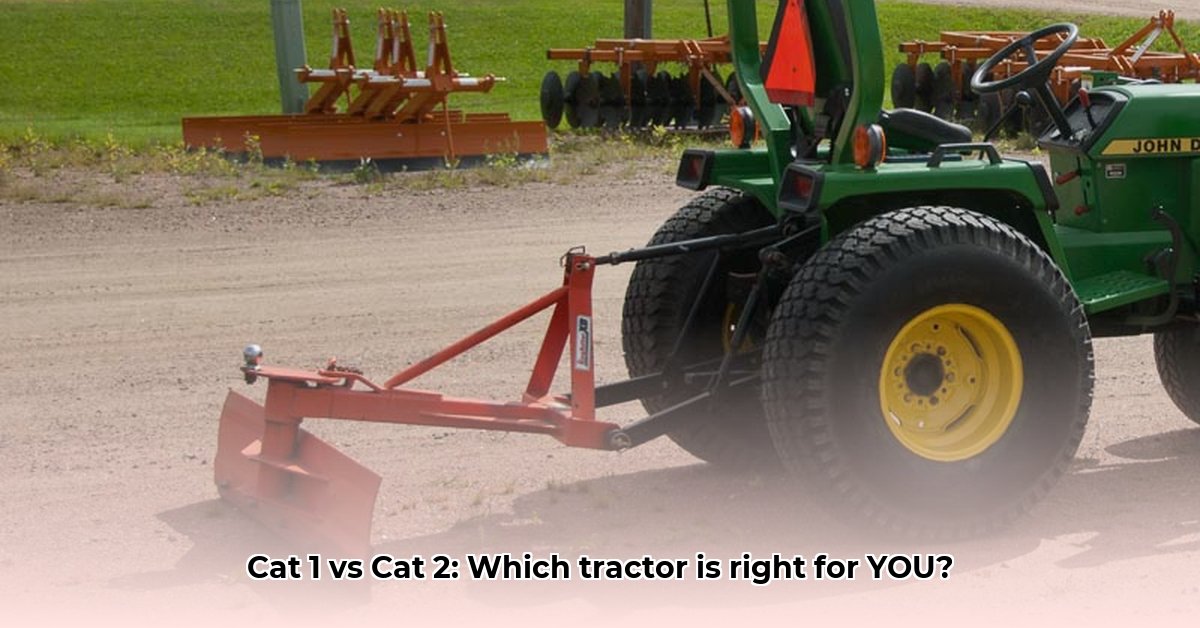
Choosing the right three-point hitch for your tractor is a critical decision impacting farm efficiency and sustainability. This guide clarifies the differences between Category 1 (Cat 1) and Category 2 (Cat 2) hitches, helping you select the optimal system for your operation. For more details on Category 1 hitches, see this helpful resource: Category 1 Hitches.
Understanding Three-Point Hitch Categories: Cat 1 vs Cat 2
Three-point hitches are the standard for attaching implements to tractors, boosting productivity. They're categorized (0-4) based on size and capacity. We'll focus on Cat 1 and Cat 2, the most prevalent for smaller to mid-sized farms. These categories are standardized, ensuring proper fit and preventing mismatched equipment that could cause damage or inefficiency.
The key differences lie in pin diameter, lifting capacity, and compatible implement sizes. Higher category numbers indicate more robust hitches for heavier, larger implements.
Here's a comparative table:
| Category | Pin Diameter (inches) | Approximate Horsepower Range | Typical Implements |
|---|---|---|---|
| 1 | 0.967 | 20-50 (though some sources show variation) | Smaller mowers, tillers, seeders, small cultivators |
| 2 | 1.181 | 40-80 | Larger mowers, cultivators, harrows, planters |
Important Note: Horsepower ranges are estimates. Consult your tractor's manual for precise specifications, as manufacturer recommendations vary. This is crucial for safe and efficient operation.
Choosing the Right Hitch: Optimizing for Your Farm
Selecting the correct hitch category is vital for efficient and sustainable farming. Mismatched equipment results in broken parts, reduced productivity, and costly repairs – detrimental to profitability and environmental sustainability.
1. Tractor Horsepower: Your tractor's horsepower (HP) rating is paramount. The table above offers general guidance, but your tractor's manual provides the most accurate data. Select a hitch whose horsepower range matches or slightly exceeds your tractor's capacity. Using a hitch rated for significantly lower horsepower than your tractor can overload it. Conversely, using a much higher-capacity hitch is an unnecessary expense.
2. Implement Size and Type: What tasks will you perform? Smaller tillers and seeders typically work with Cat 1 hitches. Conversely, larger implements like heavy-duty cultivators or harrows usually require the greater capacity of a Cat 2 hitch. Consider future needs; your operations might expand, requiring a hitch upgrade.
3. Farming Practices: Your farming methods also influence your choice. No-till farming, for example, may require specialized implements compatible with a particular hitch category.
Beyond Horsepower: Additional Considerations
While horsepower is critical, other factors influence your decision:
Lift Arm Spacing: The distance between lift arms may vary slightly between categories. Ensure your implements are compatible with your hitch's geometry.
Implement Availability: Check the availability of implements within the category you're considering. Some specialized equipment may only be offered in one category.
Adapters: Adapters exist to utilize implements designed for one category on a different hitch category. While possible, this usually impacts efficiency and can place additional stress on the equipment.
Maintaining Your Three-Point Hitch: Safety and Longevity
Regular maintenance is essential for the longevity of your hitch and your safety.
Regular Inspections: Frequently inspect hitch pins, arms, and hydraulics for wear, damage, or corrosion. Replace damaged components promptly.
Lubrication: Keep moving parts lubricated to prevent corrosion and ensure smooth operation. Refer to your tractor manual for lubrication instructions.
Safe Operation: Before operation, confirm that implements are securely attached. Avoid overloading, and exercise caution during use.
Conclusion: Making Informed Decisions for Sustainable Farming
Understanding Cat 1 and Cat 2 three-point hitch differences is crucial for selecting the appropriate equipment. By considering your tractor's horsepower, implements, farming practices, and future needs, you can make an informed decision that optimizes efficiency, minimizes costs, and promotes sustainable farming practices. A matched hitch offers long-term efficiency, lower repair costs, and improved safety. Don't merely choose a hitch; choose the one that optimizes your farm's success.